
Aristotle
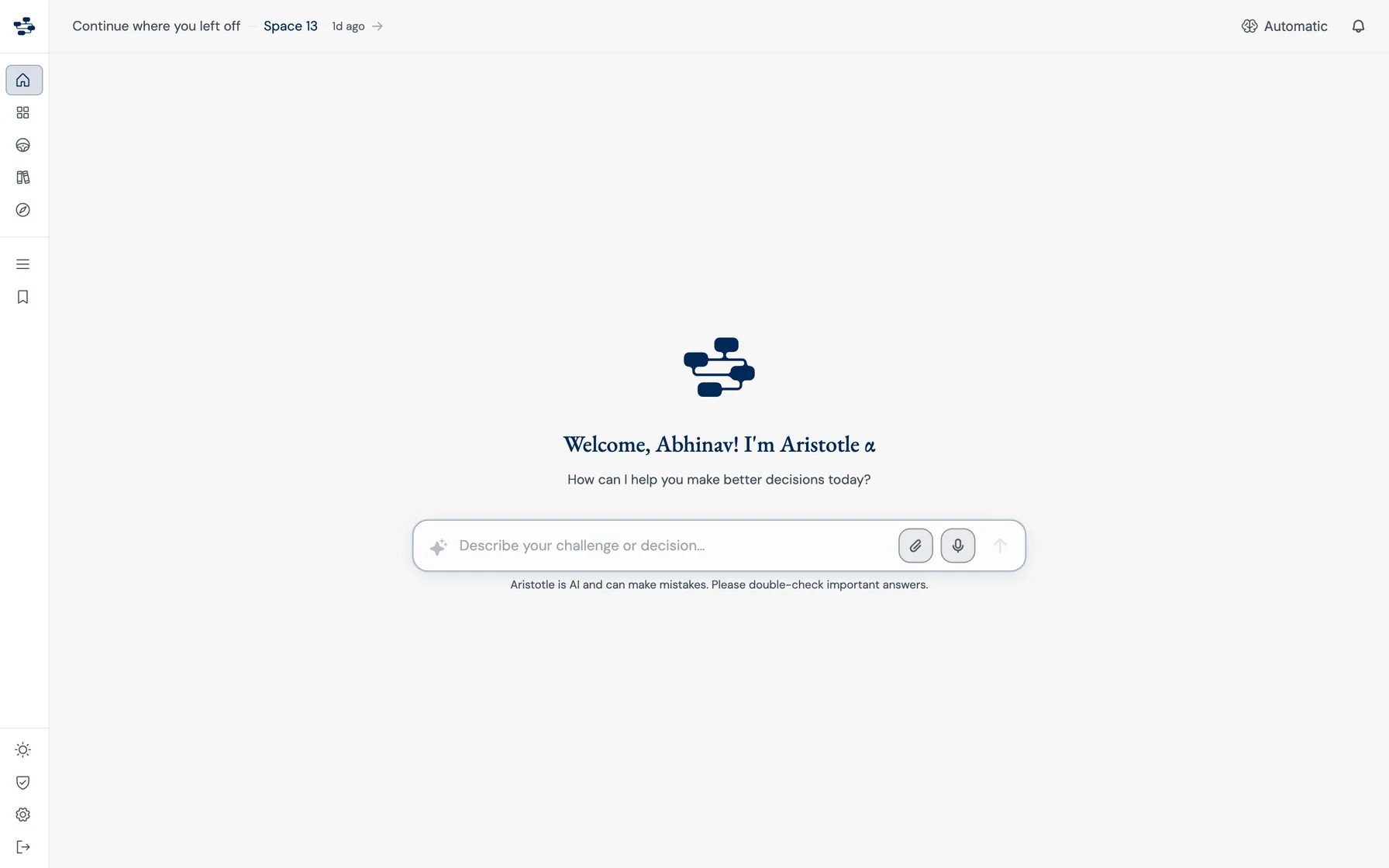
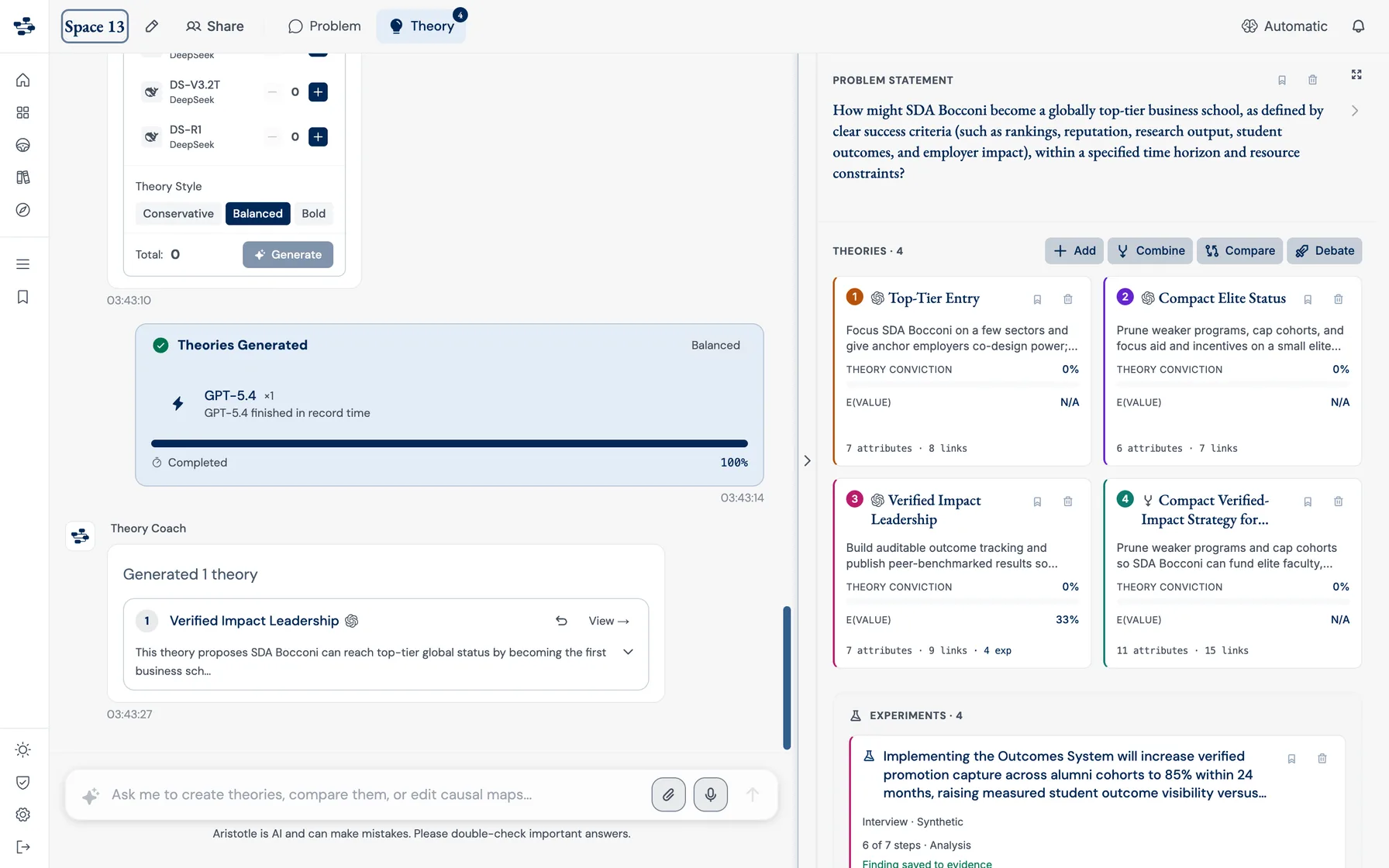
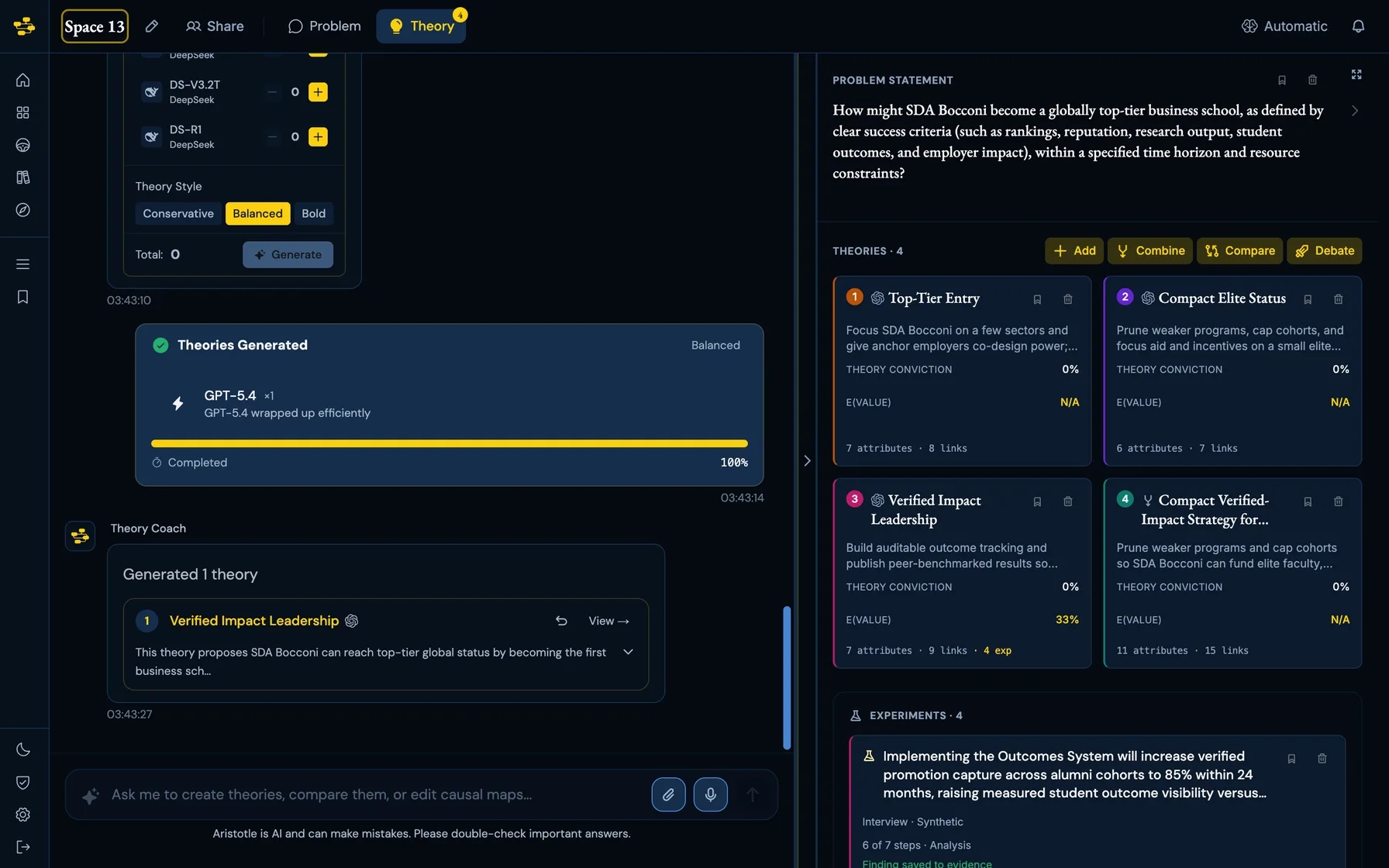
One guided path from problem to decision. Describe the challenge; Aristotle frames it, builds rival theories, designs the tests and helps you commit.

Aristotle helps learners and managers think like a scientist: frame a problem, build rival theories of value, test them with experiments and decide based on evidence.
One guided path from problem to decision. Describe the challenge; Aristotle frames it, builds rival theories, designs the tests and helps you commit.
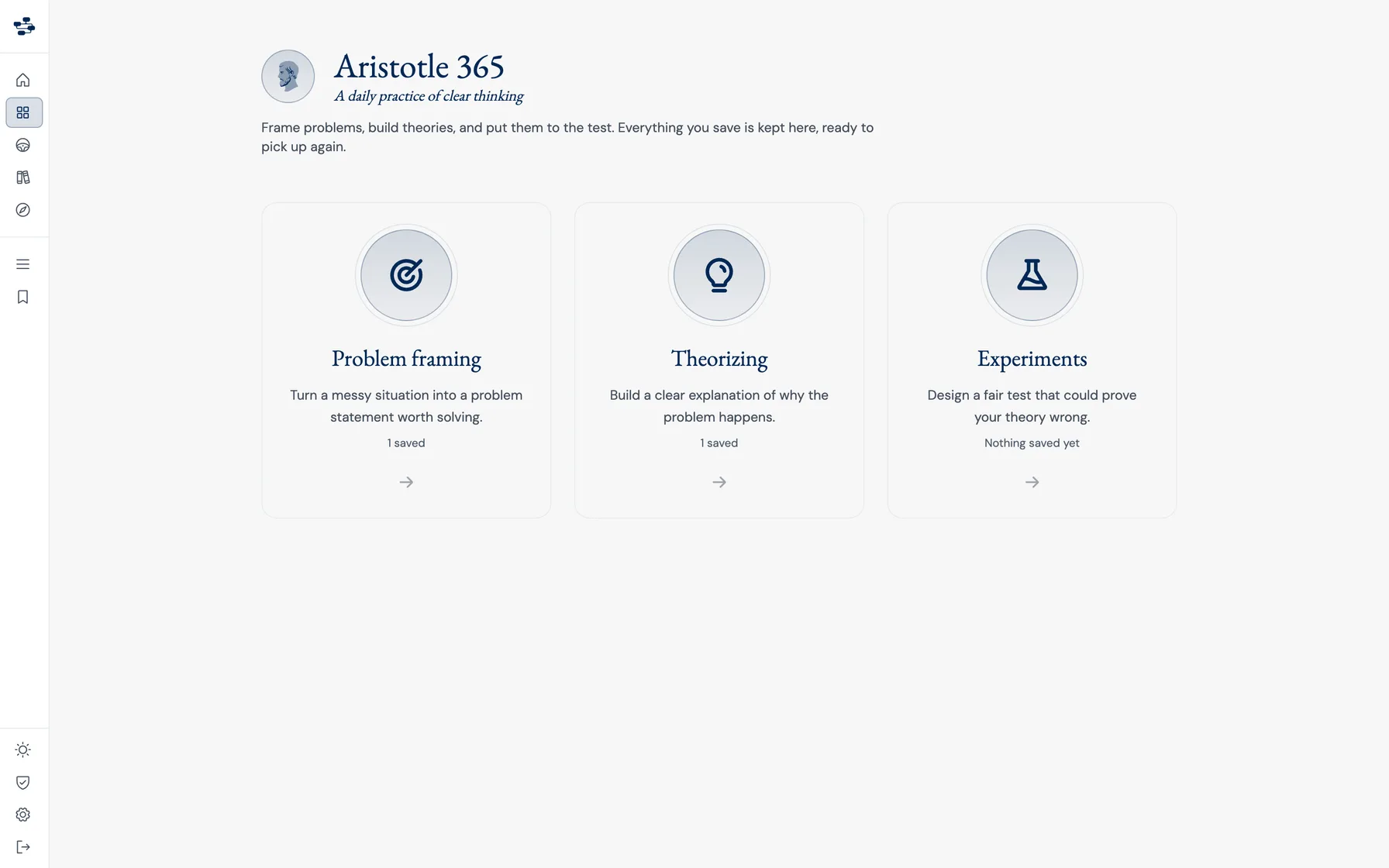
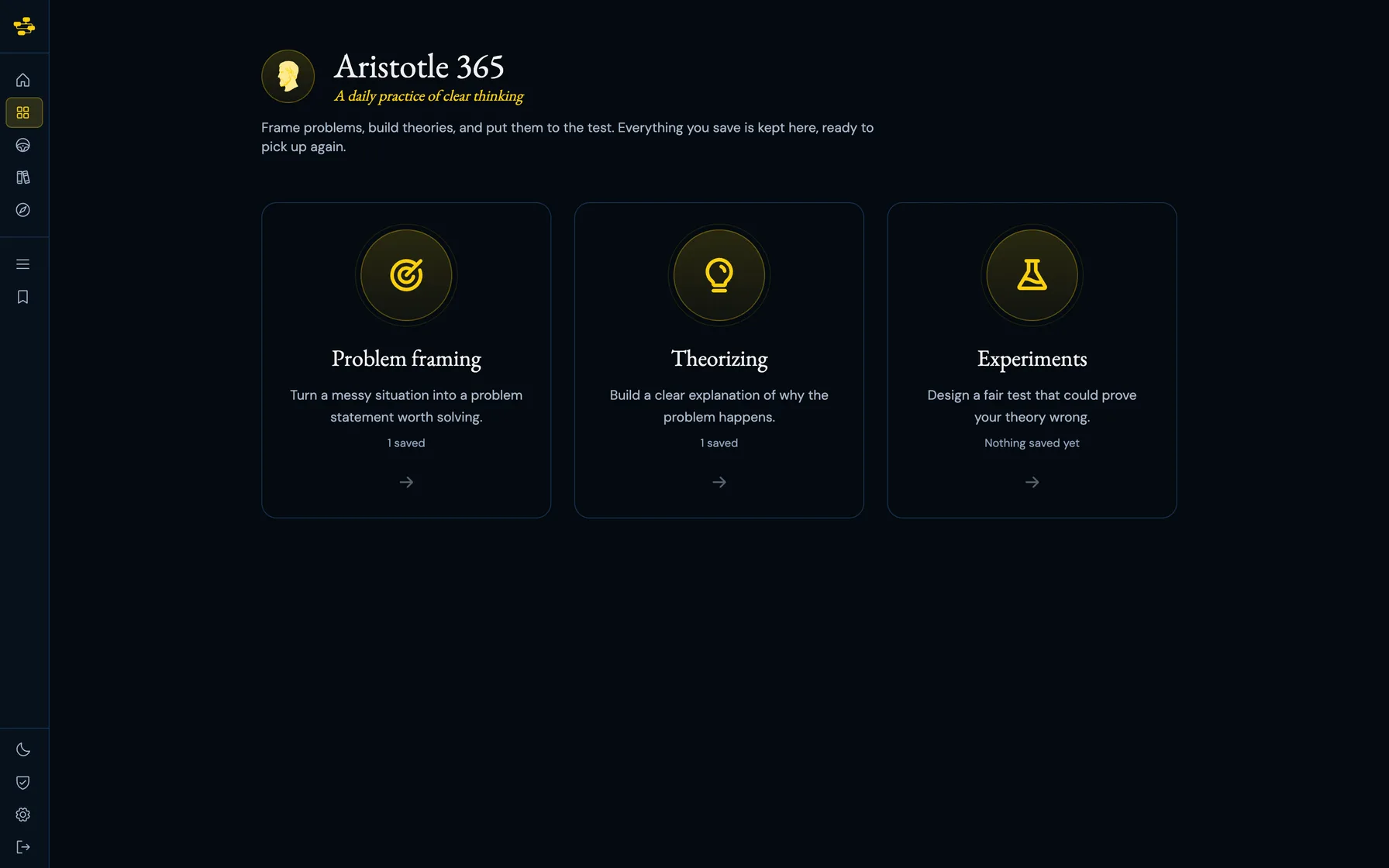
A daily practice of clear thinking. Frame a problem, build a theory or design a test as a standalone session — one piece of the method at a time. Everything you save is kept for next time.
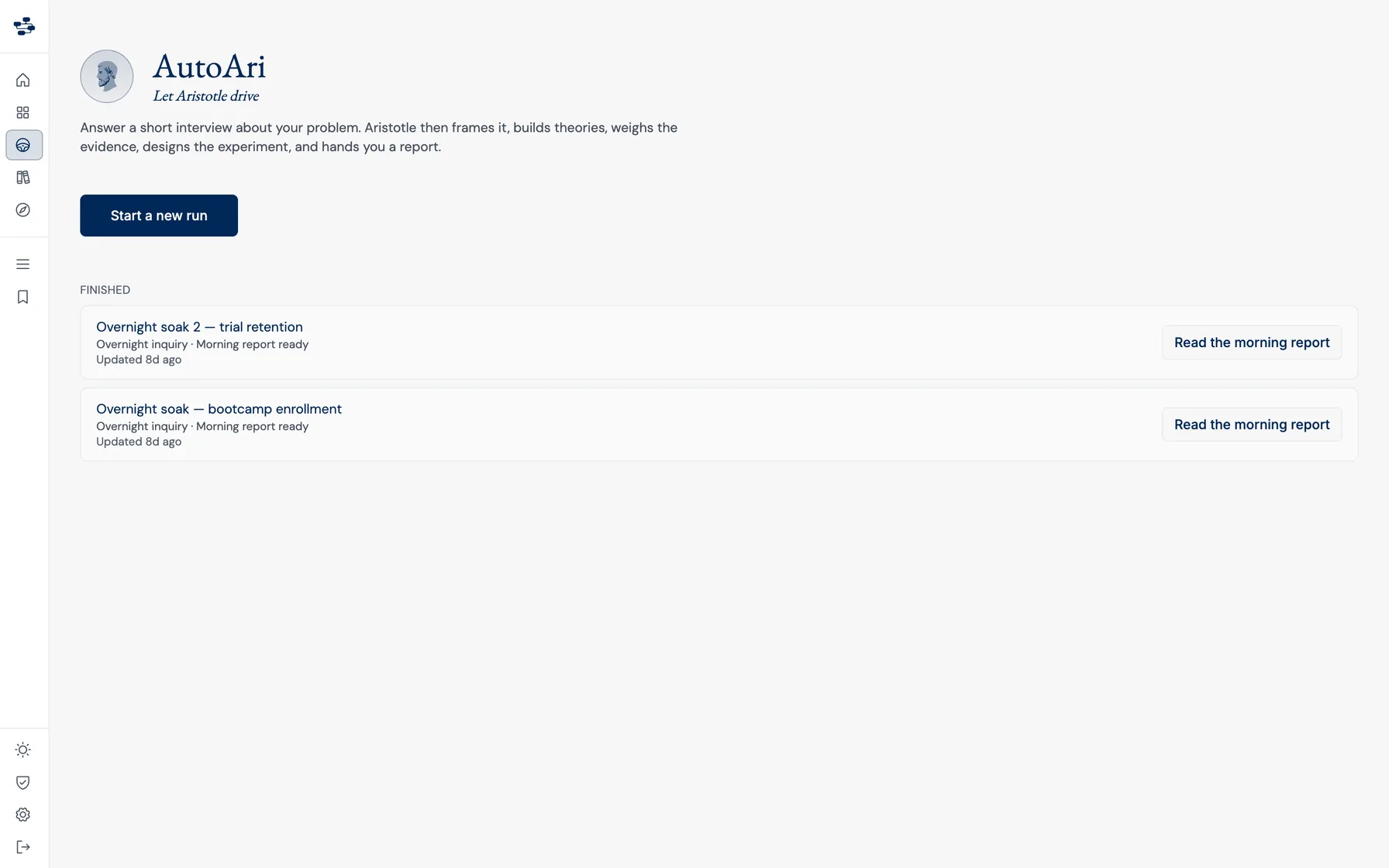
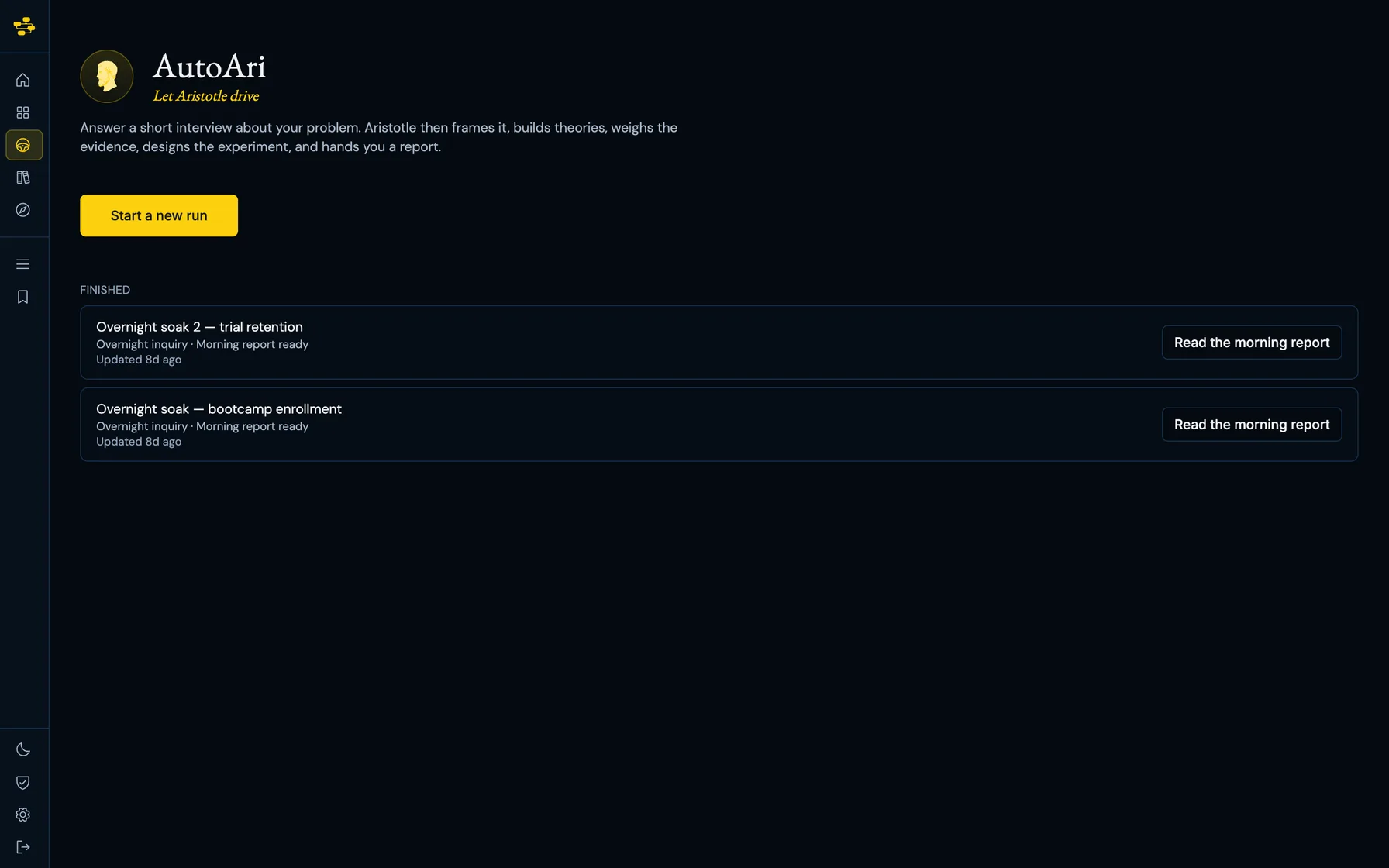
Answer a short interview. Aristotle then frames the problem, builds theories, weighs the evidence, designs the experiment and hands you a report — and keeps digging overnight if you ask.
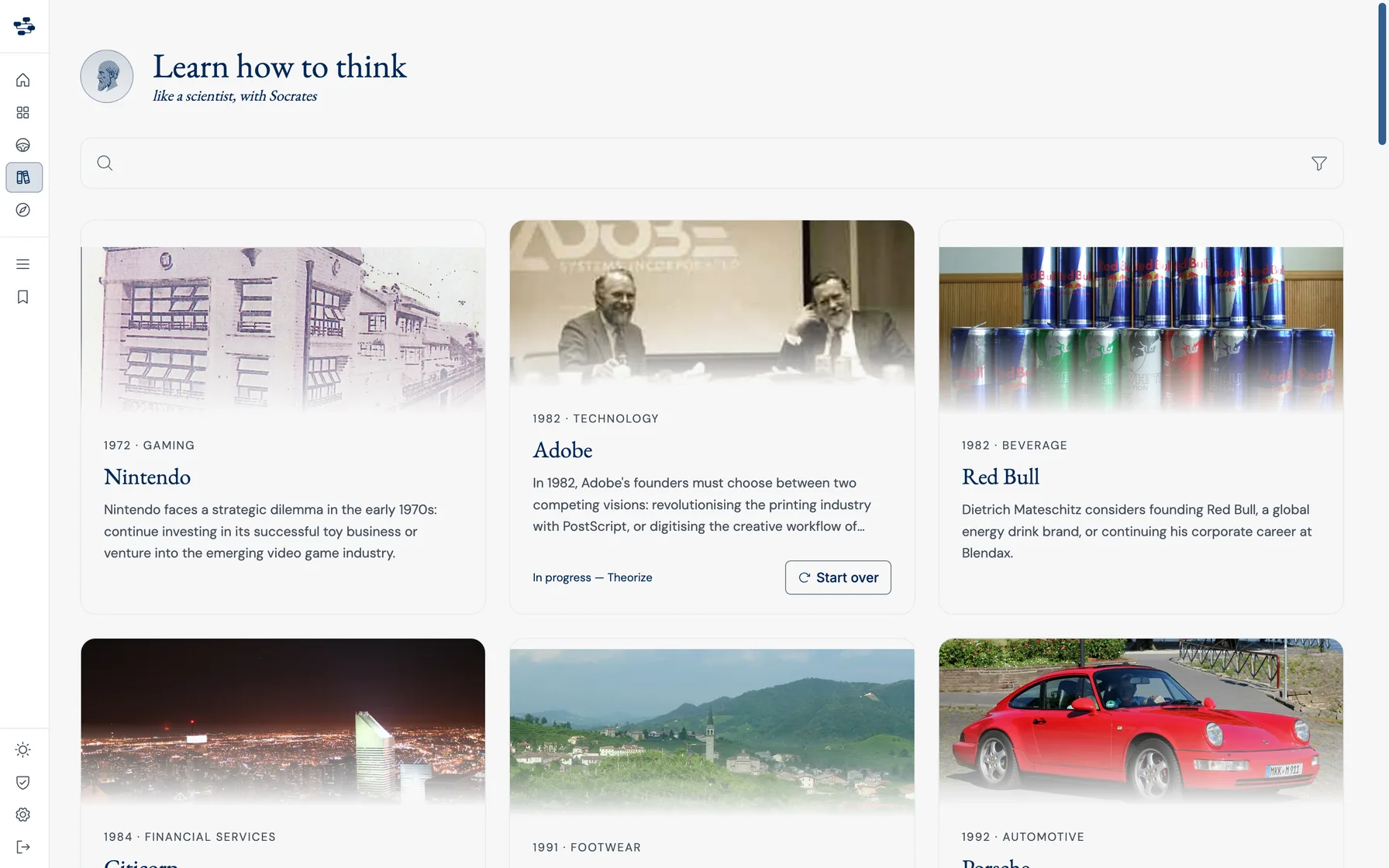
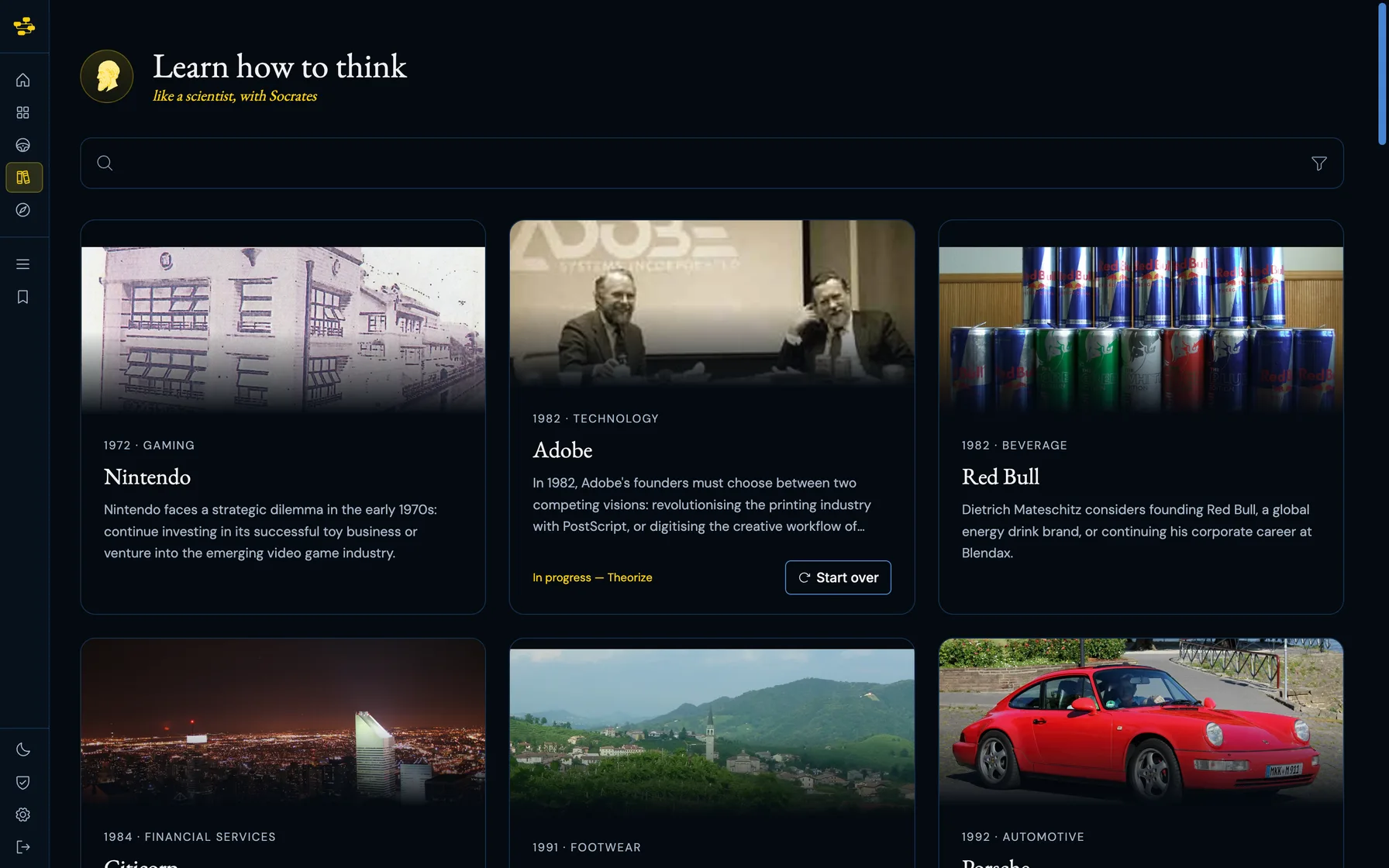
Real decisions — Apple, Adobe, Nintendo, Red Bull and more — as guided journeys. Take the decision-maker's seat and work through each act with a Socratic coach.
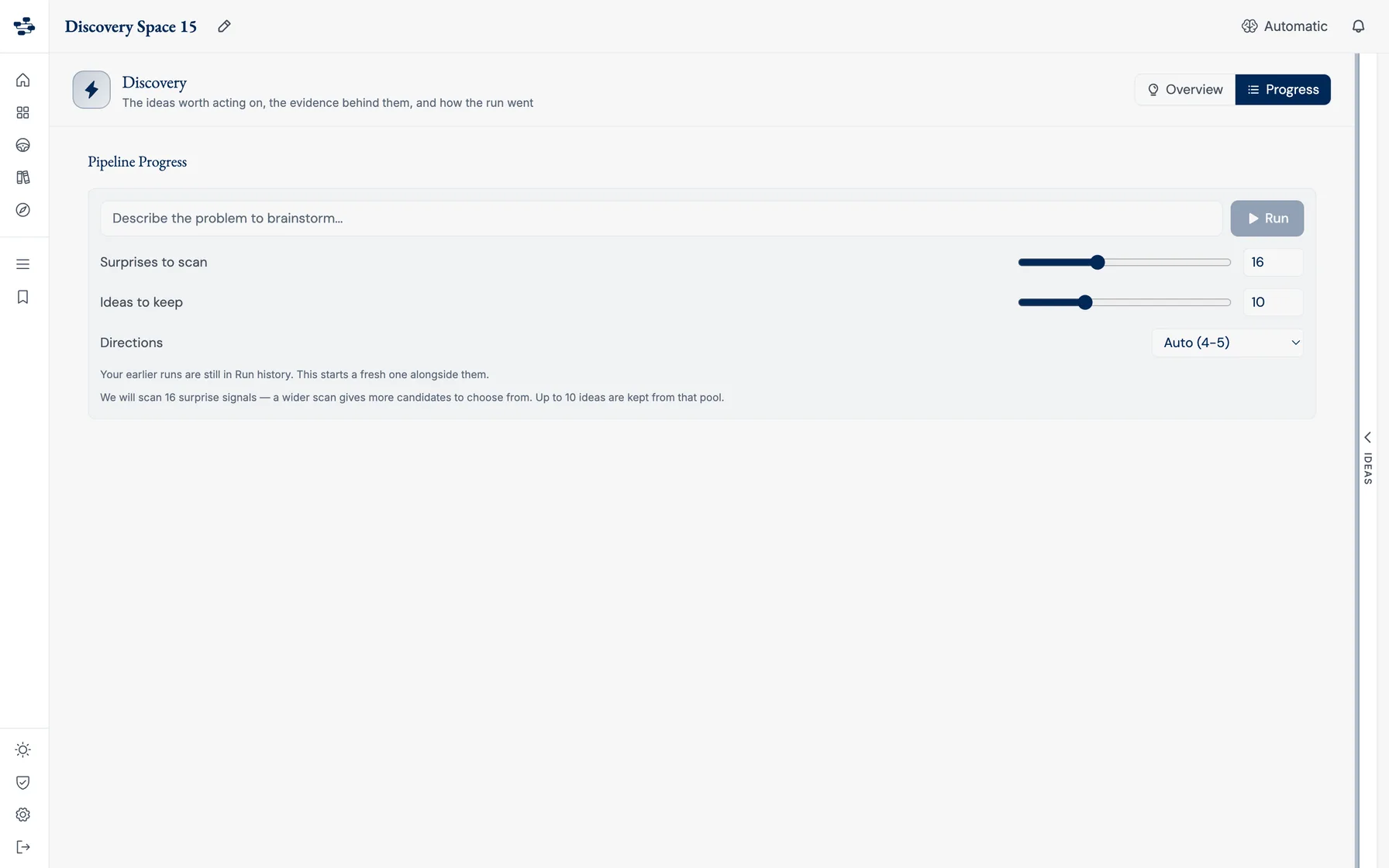
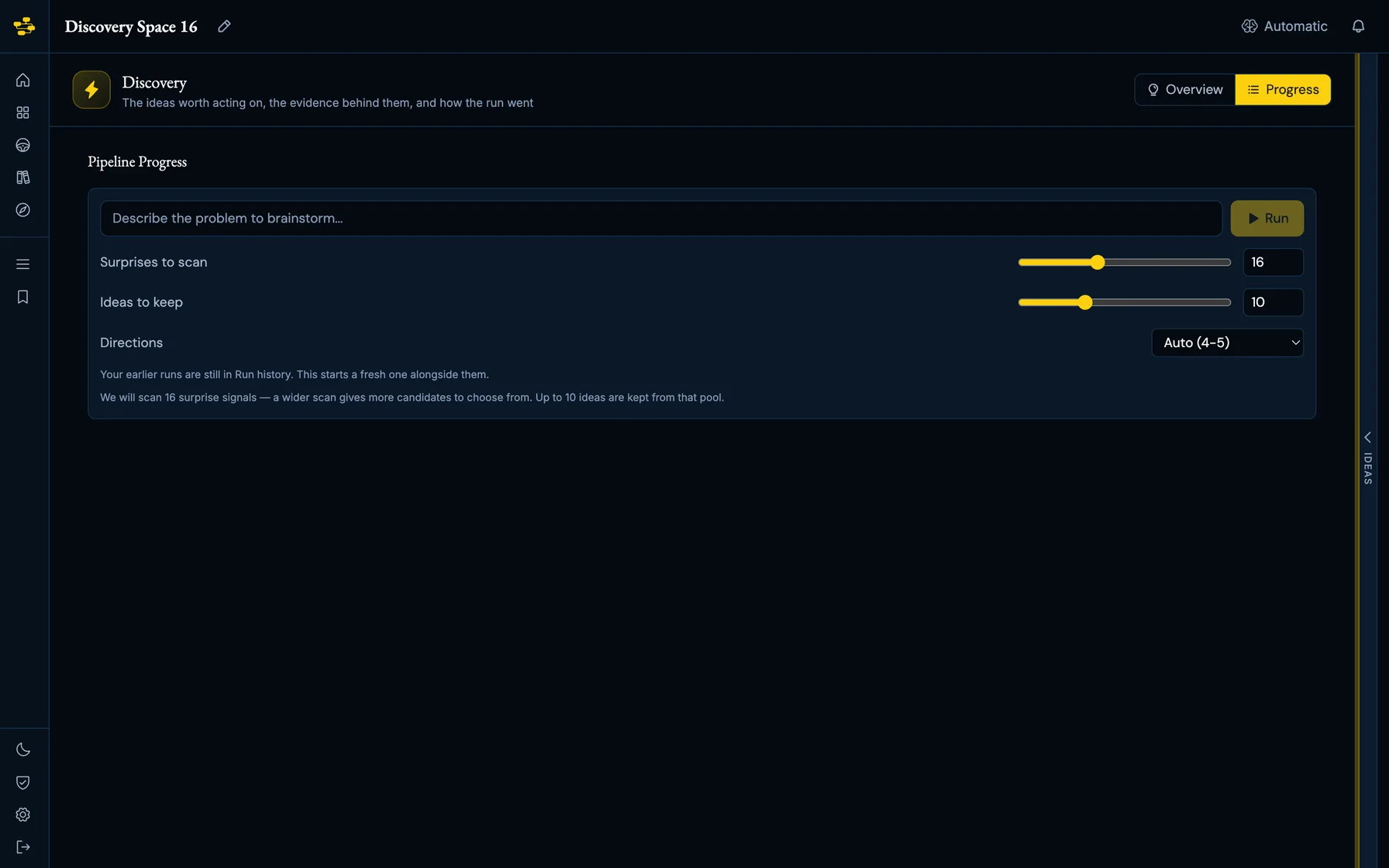
Abduction, run as an agentic pipeline. Describe a situation; Peirce scans it for surprises, proposes the causes behind them and turns the strongest into ideas worth exploring — each with its evidence, risks and next check.
Move past yes or no. Put a number on how much you believe each theory and decide with the uncertainty in view.
Turn intuitions into explicit causal maps: the factors that drive an outcome, and how they connect.
Work through real cases with Socrates asking the questions — a nudge, a guide or the point stated plainly when you need one.
Any managerial decision under uncertainty
Evaluate strategic fit and synergy potential
Assess leadership impact on organizational outcomes
Optimize financing decisions under uncertainty
Prioritize R&D investments with causal reasoning
Evaluate market entry strategies systematically
Design and test organizational changes